

New Research Reveals ‘Turning Point’ for Construction Risk as Industry Disputes Reach Record High

We’ve analysed one of the largest industry-wide datasets of risk communications – revealing a turning point from reactive, adversarial dispute resolution to proactive, digitally enabled risk management.
Our report – From risk to resilience: the state of contract management in construction in 2026 – draws on data from nearly 1,000 New Engineering Contracts (NEC) across 2024 and 2025. With high-performing NEC contracts averaging 43 early warnings (EW) per project, construction teams are increasingly utilising this proactive collaborative risk management process to neutralise risks before they escalate.
Early warnings require either party to promptly notify the other of any issue that can impact costs, delay completion or impair performance. Existing as a prevention mechanism, their use allows project teams to coordinate and prevent potential risks and disputes – rather than having to react when they have graduated to a project impact.
Data from projects using Sypro shows a clear link between project value and early warning activity, rising from an average of 15 on projects under £1 million to more than 150 on major schemes exceeding £100 million.
The findings suggest that for the UK’s most complex projects, a high volume of EWs has become a key indicator of project health rather than a sign of failure. This follows a backdrop of rising adjudication referrals, which hit a record high between financial year 2023-2024 and included the high-profile collapse of major contractor ISG in September 2024.

Dr Stuart Kings, NEC4 drafter and Technical Director at Sypro, said: “From the Latham Report to the Construction Playbook and adjudication insights by King’s College London, the industry has spent more than 30 years recognising the industry pressures impacting collaboration and contract management. What is changing now is the ability to proactively act to promptly address the realities on site.
“Our data show that high-performing teams are habitually using early warnings, one of the most important collaborative proactive risk management processes under NEC. By actively engaging with the NEC risk process as intended, teams are surfacing issues before they become disputes, keeping instructions tight to prevent scope creep and investing in programme discipline through consistent digital monitoring.”
Our findings arrive at a critical juncture for healthcare infrastructure, as the NHS navigates its long-term Capital Improvement Plan and the New Hospital Programme.
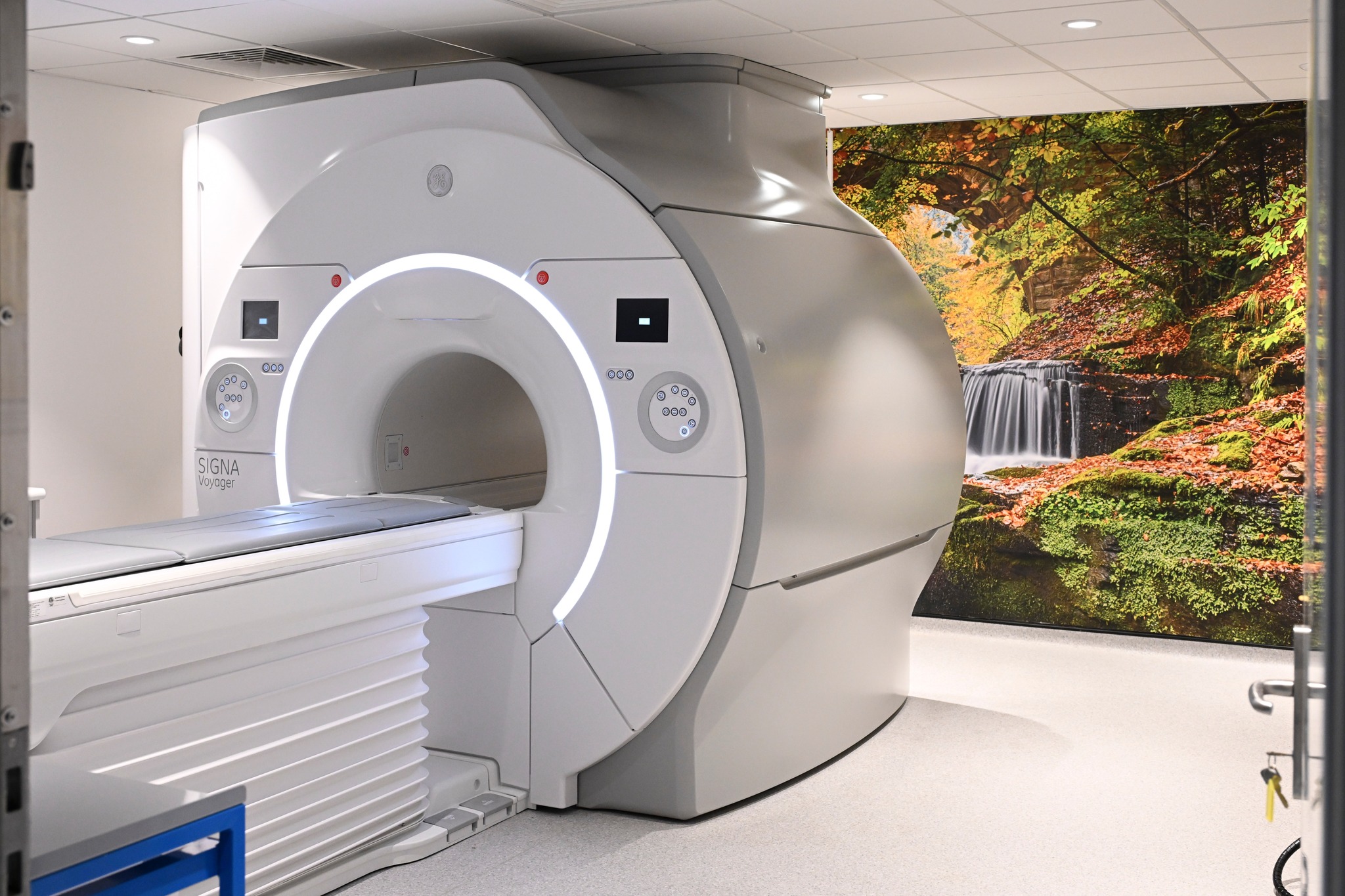
The report draws on case studies including The Bedford Community Diagnostic Centre (CDC) and primary care hub, where Sypro has supported the triggering of 50 early warnings on the project, with Bedfordshire Hospitals NHS Foundation Trust actively bringing contractors in early to identify risks upfront. This proactive approach is being held up as a blueprint for high-stakes public sector projects where budget certainty and operational continuity are non-negotiable.
From the findings, we’ve set out four key recommendations for the industry to reduce risk further. These include embedding proactive risk management through early warnings, strengthening programme discipline and early contractor involvement, investing in digital tools to enable real-time collaboration and upskilling teams to close knowledge gaps and improve consistency.
The report further explores how digital integration is reducing administrative burden by up to 12 hours per month, the rise of ‘open-book’ transparency in NEC Option C contracts and the transition toward AI-assisted predictive risk modelling.

Stuart added: “The next era of project success will depend on smarter, more resilient approaches to contract management. JCT and NEC frameworks are evolving with the digital landscape to enable teams to manage risk in real time.
“Where early contractor involvement is embedded, using Secondary Option X22 on NEC, teams are identifying risks and opportunities long before a spade goes in the ground. These are proven practices already being used on the best-performing projects.
“Culture and capability also need to be considered, along with investment in the right tools, systems and software – all of which are key policies within the government’s recently published Contract Management Playbook. Digital tools only work if they are embedded across the supply chain while transparency and collective problem-solving must replace the adversarial instincts the industry has followed for decades.
“That means proper training, real knowledge-sharing and a genuine effort to bring experienced professionals trained on traditional methods up to speed on what modern contract management looks like. The industry has the Playbook and the data shows a proven approach to future-proof project delivery.”
To read the full report and for more information on Sypro and its contract management software, visit https://sypro.co.uk/risk-to-resilience-the-state-of-contract-management-in-2026/