

Wind, heat and fog: the weather measurements your Contract Data is missing

Dr Stuart Kings
NEC4 Drafter & Co-author
PhD, MRICS, MCIPS, BSc (Hons)

NEC4’s standard weather measurements cover rain, frost and snow. For many projects the weather that really stops work is something else entirely, and clients can fix that at tender.
Four measurements, many risks
The standard Contract Data for NEC4 ECC lists four weather measurements: cumulative rainfall in a calendar month, the number of days with rainfall over 5mm, the number of days with a minimum air temperature below zero, and the number of days with snow lying at a stated time. Unless something else is added, those four are the only weather events that can ever be a compensation event under clause 60.1(13).
At Sypro’s Knowledge Hub webinar on 10 November, Dr Stuart Kings, one of the nine drafters of NEC4, listed the obvious gaps. The first was wind: “on, you know, high rise buildings, we’re using tower cranes more and more.” Contractors already employ people to watch the forecast and plan crane lifts around it. Yet a month of exceptional wind is entirely contractor risk under the standard wording.
The gaps, project by project
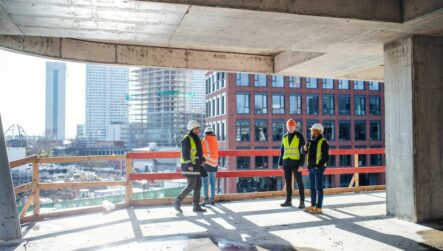
Wind affects crane lifts, roofing, cladding and work at height on almost every large development.
Excess heat affects concrete pours, surfacing and worker welfare. Stuart noted that “you may mock this”, but he has seen excess heat affect projects in the UK, and the contract is used worldwide.
Wave height matters for coastal and marine works, and river level for work in or near watercourses.
Fog affects runways and airports, where visibility can halt operations entirely.
Pinsent Masons, commenting on NEC4 weather provisions, makes the same point about wind: where cranes or wind exposure matter, a specific wind measurement should be included, and the distance between the measurement location and the works should be checked.
How to add a measurement properly
The Contract Data includes space for additional weather measurements. Clients can use it, but the drafting must be precise. Stuart described a live project where the client simply wrote the word “wind”. That is not a measurement. It cannot be compared with weather data, and it invites dispute.
A usable measurement is expressed as the Met Office would record it. Stuart’s example was the number of days with wind speed exceeding a stated threshold, for instance 30 knots, measured at a stated height relevant to the crane. As he put it, “it’s got to be in a metric that is scientific and could be measured.”
The Met Office’s construction guidance lists the monthly variables available in its reports, including mean wind speed, sunshine, ground frost and, in its downtime reports, maximum gust speed and days of lightning. If in doubt, Stuart’s advice was to contact the relevant Met Office location before finalising the wording.
Check the data exists
Not every weather station records every measurement. Stuart recalled a project near Sellafield where the nearest station did not record snow lying at 0900, so that measurement had to be taken from another location.
Where no suitable data exists at all, the Contract Data allows the parties to state assumed 1 in 10 year values instead. That is better than leaving a measurement in the contract that can never be tested.
Why clients should bother
The natural reaction is to leave all weather risk with the contractor. Stuart’s view was that this is a false economy: “I suppose the natural reaction is put all the risk on the contractor, but that’s going to be reflected in the tender, in their program” and in the total of the Prices.
There is a second cost. The contractor carries the same base weather risk into every compensation event it prices during the contract. If a new outdoor work package is instructed in winter, the quotation will include an allowance for weather the contractor cannot claim for. Fairer weather measurements at tender produce better value tenders and cheaper change.
CECA’s bulletin on assessing weather delays reinforces the point: without additional measurements, only the four standard measurements can support a valid compensation event.
A tender checklist
Identify the weather that will actually stop work. Look at the programme, the main activities and the plant.
Express each measurement as data. State the variable, the threshold and the unit, in terms the Met Office uses.
Name the location. Choose the station or location carefully and confirm it records the measurements you need.
State assumed values where data is missing. Do not leave a measurement that cannot be assessed.
Take advice on the wording. A measurement that seemed clear at tender can be read differently once the project is live.
Better data, fewer disputes
Weather will always be a source of delay. Whether it becomes a source of dispute depends largely on how carefully the Contract Data was written before the contract was signed.
Sources
Met Office, Construction catalogue guide: Planning Averages and Downtime Summary Reports. https://www.metoffice.gov.uk/binaries/content/assets/metofficegovuk/pdf/business/sectors/construction-catalogue-guide-v2.pdf
Pinsent Masons, Navigating weather conditions in Hong Kong SAR NEC4 contracts (March 2025), which also summarises the standard NEC4 ECC weather test. https://www.pinsentmasons.com/out-law/analysis/nec-risk-allocation-for-weather-events
CECA, NEC Bulletin No. 48: Assessing weather delays under NEC contracts (December 2024). https://ceca.co.uk/wp-content/uploads/2024/12/CECA-NEC-Bulletin-Nr-48-Assessing-weather-delays-under-NEC-contracts-December-2024.pdf
Speaker quotes: Dr Stuart Kings, Sypro Knowledge Hub webinar, 10 November 2026.
Meet the author Dr Stuart Kings
NEC4 Drafter & Co-author
Get started now with Sypro